
Darling Range Wildlife Shelter
How a Cheeky Trip to Demo the '8-Step Abdominal Survey' with Perth Animal Ultrasound (PA-US) Led Us Here!
Supporting Wildlife Heroes in Western Australia: How a Chance Meeting Inspired Our Newest Sponsorship
Our connection to an extraordinary organisation in Western Australia began during a Welsh Government Export visit to Australia. At the end of the trip, we added a short stop in Perth, where we showcased our two-day “8-Step Abdominal Survey” workshop with Dr Louise Barnett—a dedicated veterinary surgeon, ultrasound imager, and the founder of Perth Animal Ultrasound.
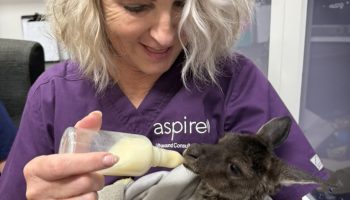
During this visit, we met Molly, a trainee veterinary nurse whose passion left a lasting impression on us. In every spare hour she has, Molly fosters orphaned joeys with the aim of preparing them for eventual release back into the wild through the Darling Range Wildlife Shelter. This volunteer-led, not-for-profit organisation provides vital treatment, care, and rehabilitation for native Australian wildlife.
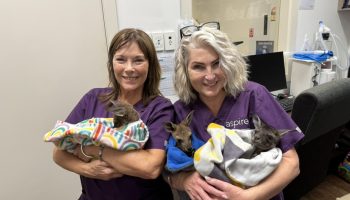
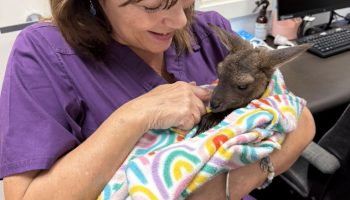
Molly’s dedication to these vulnerable young macropods was inspiring, and it didn’t take long for us to fall completely in love with the four tiny joeys she was raising—particularly the one Jules immediately (and gleefully) renamed Janice.
Molly’s mum, Toni—also a vet and one of our workshop delegates—clearly passed along her devotion to animal care. It was easy to see where Molly’s compassion and commitment came from.
After returning to the UK, we met with Molly and the team at the Darling Range Wildlife Shelter to explore how Aspire UCS could support their work, and especially how we could help Molly care for little Janice and her fellow joeys. Only then did we fully appreciate how long and complex the rehabilitation journey is before these young macropods are ready to live independently in the wild.
A crucial part of this process involves access to “soft release pens”—safe transitional enclosures that allow joeys to progress from “joey day care” (yes, that’s really what it’s called!) into larger outdoor spaces. These soft release pens need mobile perimeter fencing, constant access to drinking water, CCTV monitoring, and safe areas that encourage natural foraging behaviours.
Building and maintaining these pens is costly and relies heavily on the dedication of volunteers. We’re proud to say that Aspire UCS has recently sponsored the cost for the latest soft release pen and we will be following the progress of Janice and her brothers and sisters when they’re ready to graduate!
Our encounter with Molly, Toni and the Darling Range Wildlife Shelter highlighted the extraordinary work being done to protect native wildlife—and we’re proud to play a part in supporting their mission, and of course, Janice too.
Molly's Story - My Year as a Macropod Mum!
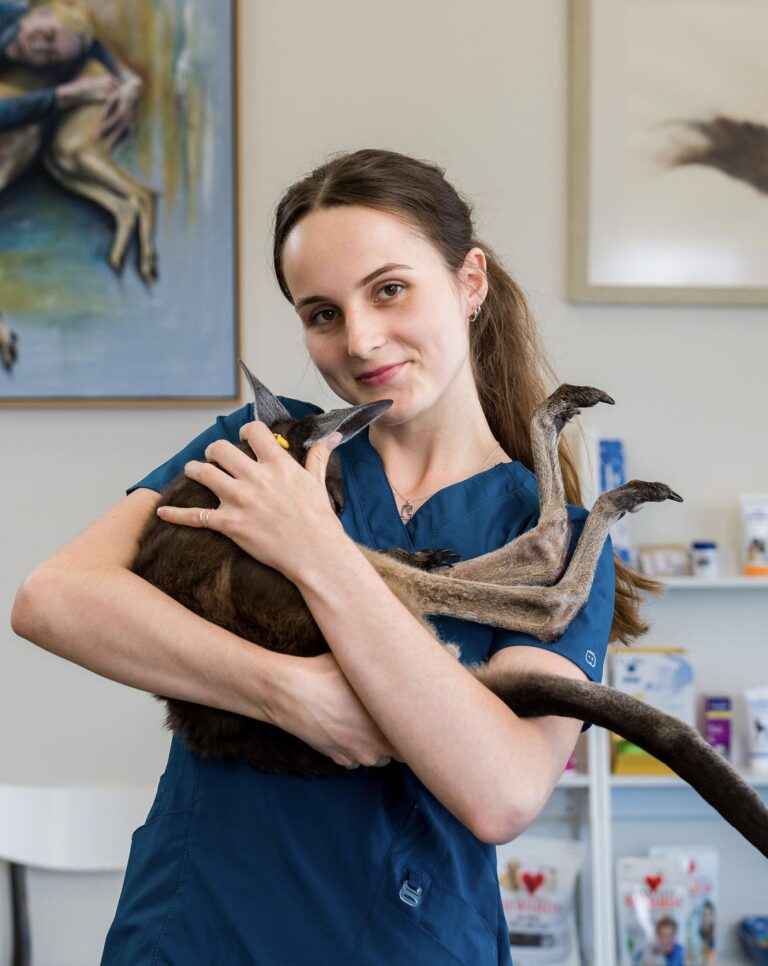
I am an 18 year old girl from Western Australia. I’m maintaining two jobs, studying a Certificate IV in Veterinary Nursing, and mothering four orphaned kangaroo joeys.
It’s no easy task – any macropod carer will agree. So much time, love, and money goes into keeping these little ones healthy and giving them the best chance at life in the wild.
Kangaroos can lose their mums in so many ways. Roos can be killed for meat and produce, maybe by farmers trying to protect their crops, many are hit by cars, and that’s just to name a few. These losses are traumatic for the babies left behind, often still in their mother’s pouch.
I’ve seen many joeys come into care, from as tiny as 300g upwards, each age group with its own needs and challenges. Pinkies require the utmost care, with feeds every few hours, day and night. They can’t yet urinate or defecate by themselves, so they must be stimulated after every feed. Their skin is sensitive and needs regular oiling, and their environment must be carefully temperature-controlled because they can’t regulate their own body heat.
This year, I brought home my first furless joey. He was 760g and had lost his mum in a motor vehicle accident. I set him up in an insulated bag with a large pillow donut to replicate his mother’s pouch. He needed feeding every four hours, even through the night, with specially formulated kangaroo milk using the correct teats and bottles.
Kangaroos are social animals who live in large mobs, its always important to raise them in pairs. So as he grew and started to develop fur, I took in more joeys to rehabilitate alongside him. A little girl joined us – she had also lost her mum in a car accident, but her case was different. She had sustained internal injuries that weren’t immediately visible. After a week, her true condition started to show, she a fractured tail and ankle, as well as internal damage that was beyond repair. My heart goes out to kangaroo carers, because it can be truly heartbreaking at times, and losses like this are all too common.
After over a month in care, my little boy continued to grow, and I brought home his brother. They moved to feeds every six hours and transitioned from their old setups into special hanging pouch bags. Which are even better replicas of their mum’s pouch.
Four weeks later, as they grew again, I brought home their sister. All three began to bond and form their own little mob. They took their first steps and hops, started sniffing around dirt and solid foods, and their coats were coming in nicely. I no longer needed to oil their skin, although the constant feeding and toileting remained.
A month later, I rescued their last sibling. A little girl who had been kept illegally by a member of the public. She was balding due to nutritional deficiencies and lack of care. Now, she’s thriving with her new little family. They’re starting to eat solid foods and go to the toilet on the grass.
I cram their feeds into my 30 minute lunch breaks at work, where I also wash mountains of fabric pouches and bags in the clinic washing machine. I spend my evenings washing milk bottles and making up more milk – a tedious task in itself. Hundreds, to over a thousand dollars, goes into buying milk and oral supplements. More money goes into their healthcare, diagnostics, bottles, special teats, and equipment.
When we believe the time is right, “joey daycare” begins. It’s a weekly meeting between carers and their orphaned babies to help them socialise and form new families. This transitional daycare gradually extends from a one hour catch up to a full day stay.
Finally, when they’re ready and more independent, the joeys move to the kangaroo pens at the Darling Range Wildlife Shelter premises.
After around a year of rehabilitation with licensed carers (both in their homes and onsite at the shelter,) the kangaroos are ready for pre-release. We use mild sedatives to transport them to a large soft-release pen out in the bush. Here, the mob gets used to the land where they’ll live out their lives. When the group is fully independent and completely dehumanised, we open the pen doors, and they can finally live free in the wild once again.
The most beautiful part of it all is seeing everyone come together for one goal and one set of values. No matter the amount of diarrhoea you get covered in, the lack of sleep, or the inevitable grief we all face.
In my case, I’m 18, working, and studying, but there are so many carers out there and on our team who are in different situations. Some are retired and able to take on intensive care joeys with an incredible amount of knowledge. Some have been doing it for years, and some are newer to the team. We all have different financial situations, working hours, home lives, and challenges – but we share the same love and dedication.
I am truly so proud to know these people.