
Step 5 – Urinary Bladder, Prostate Gland/Uterus, Descending Colon, Left Medial Iliac Lymph Node and Left Aortic and CVC Trifurcation
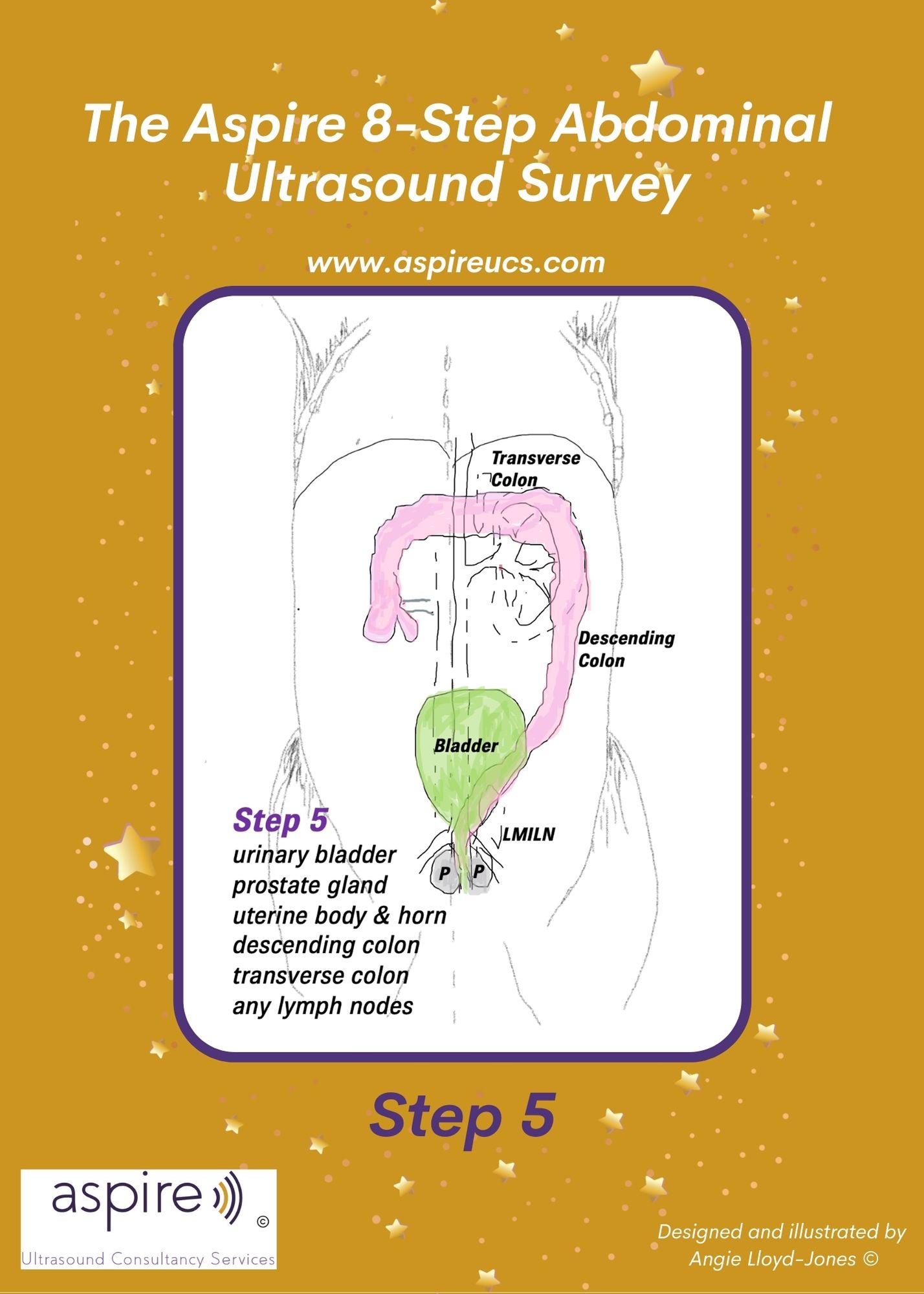
In conjunction with reading these notes, please watch the ‘Full Monty – Key Skills for Small Animal Abdominal Ultrasound’ online video lessons on the urinary bladder and colon, aorta and CVC to help consolidate your appreciation of the scan technique and your recognition of normal ultrasound characteristic appearances for these Step 5 abdominal structures.
See Step 4 for the anatomical variations of the genitourinary tract between the female and male canine and feline patients.
The Urinary Bladder
Anatomy Refresher
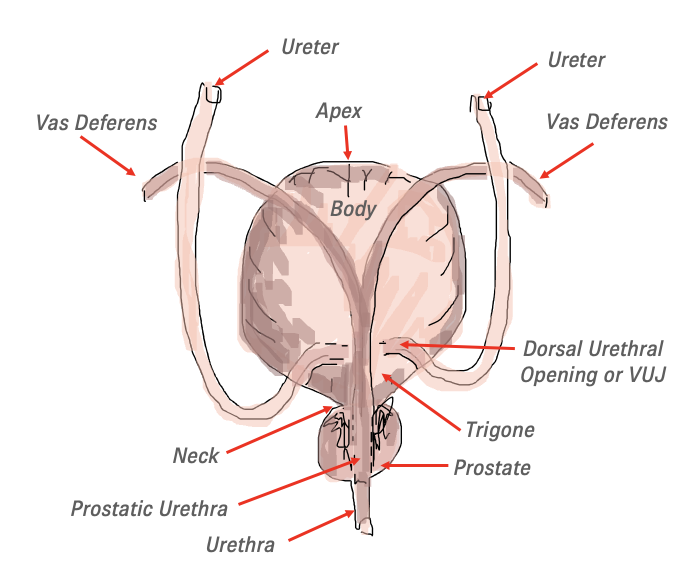
See Step 4 for diagrammatic reminder of the anatomical variations between the female and male canine and feline patients.
Technique for Scanning the Urinary Bladder
- With patient in left lateral recumbency, place the probe on left caudal abdomen in long axis, with the orientation marker towards the patient’s head and holding the probe with the pencil grip.
- Scan in a long axis plane cranial to the pubic bone to locate the urinary bladder (angle down to tabletop).
- An empty bladder is more difficult to identify and it may be necessary to positively identify it in short axis section if it cannot be seen in long axis, or by following the pelvic urethra (a midline structure) cranially, to locate the urinary bladder.
- Systematically scan through bladder in long and short axes, scanning beyond the borders of the bladder cranially, laterally, medially and caudally.
- Measure wall thickness, ideally along main beam axis where the image resolution will be at its best.
- Ballottement of the urinary bladder will help you to determine the presence / absence of suspended debris within the urine pool such as cystoliths/clots.
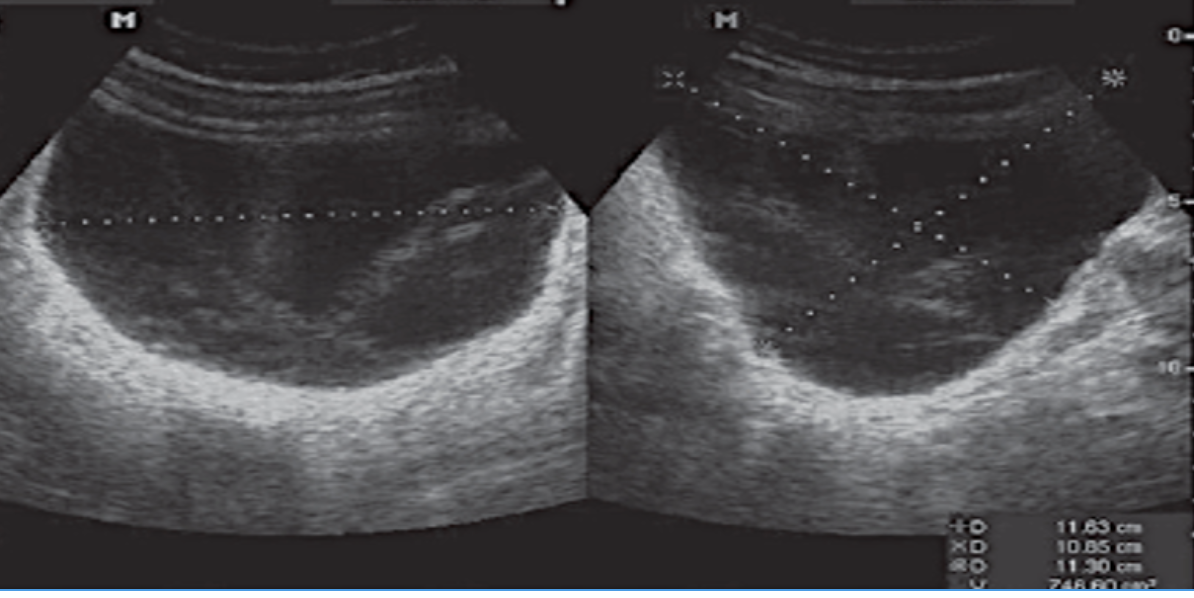
- If urinary bladder outflow obstruction is considered, estimate urinary bladder volume by measuring maximum bladder diameter in three orthogonal planes and multiply by 0.523 (prolate ellipsoid formula (L x H x W x 0.523)). Some machines actually have a volume measurement which will give you the volume if you measure the 3 orthogonal planes on a split screen (ie 2 measurements on the long axis image of the bladder and one measurement on the transverse image).
- Always measure the two maximum (VD and long axis) diameters on the long axis section of the bladder and the maximum transverse diameter on the short axis section of the bladder – this will improve on accuracy, help prevent over or under-measuring oblique sections and will standardise inter-operator bladder volume technique.
Normal Ultrasound Characteristics
-
Lies in sub-peritoneal cavity
-
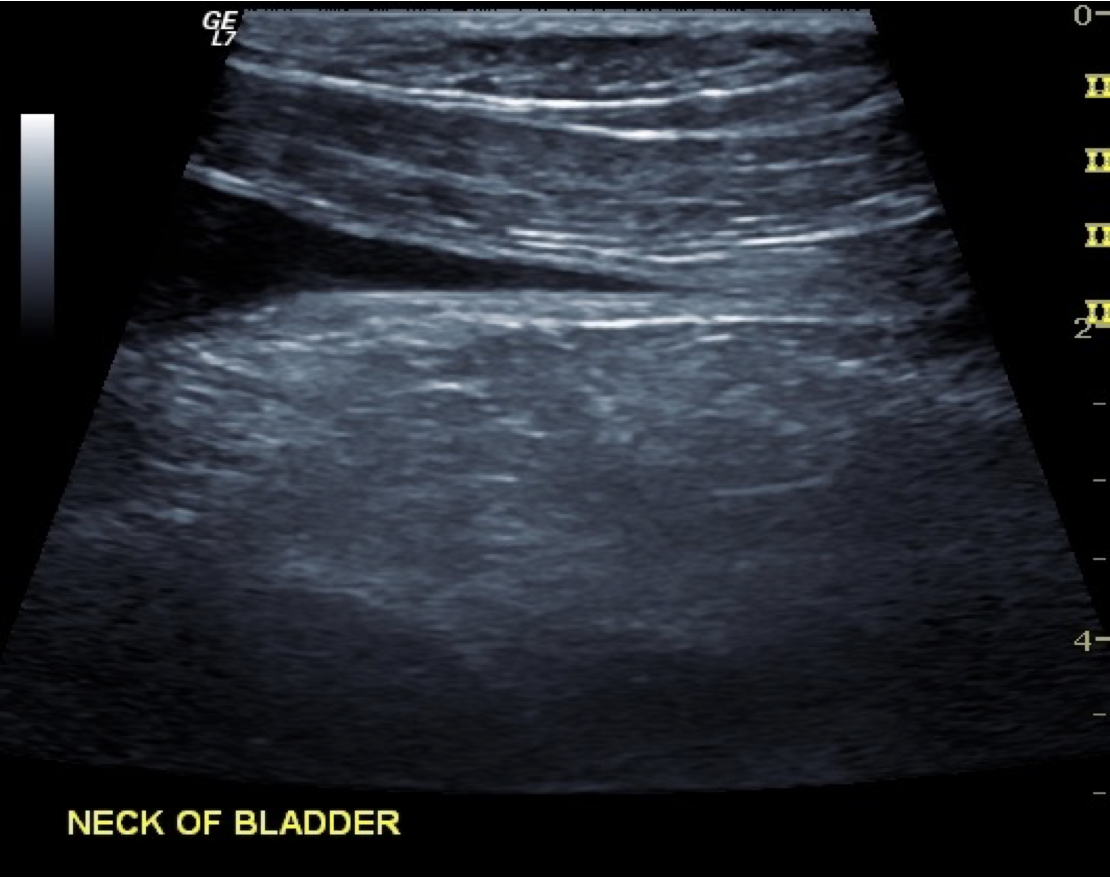
Neck of bladder is located within the retroperitoneal cavity
-
Oval or ellipsoid in shape
-
Thin, echogenic, smooth walls
-
Hyperechoic serosa, hypoechoic muscular layer and hyperechoic mucosa
-
Wall thickness varies with degree of distension
-
Normal wall thickness 1-2mm, but can be up to 5mm when bladder empty
-
Contracted empty bladder can be misinterpreted as a thick-walled bladder
-
Ureteric jets – periodic flow of urine from ureters into bladder can be seen on B-Mode (if the specific gravity of urine in ureters and bladder differs) or more easily when using Colour flow.
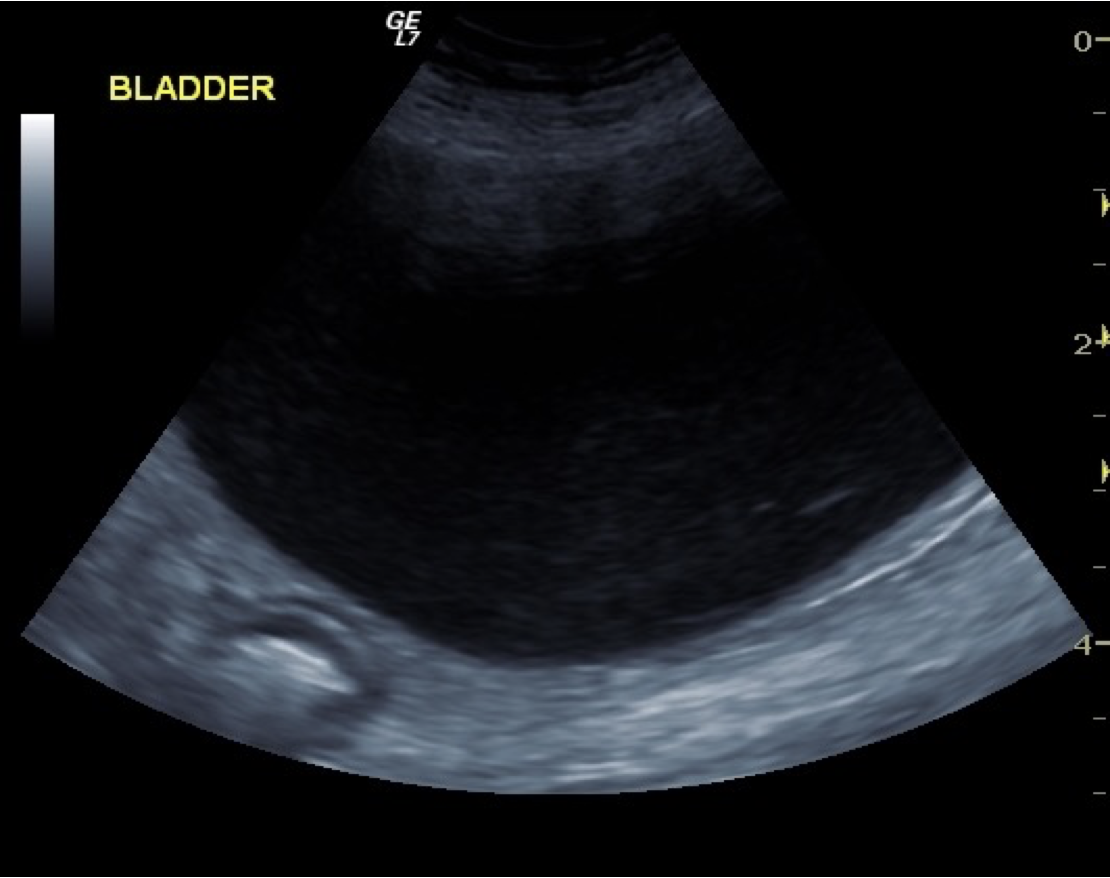
Long axis of a well-distended urinary bladder – note a section of the descending colon in the far field
Need to Appreciate and Assess
- Overall size, shape, outline and internal components of the urinary bladder and when visible the ureters and urethra
- Use Colour Doppler (Twinkle Artefact) and overall gain to confirm presence of mineralisation within the lower urinary tract
- Use Power Doppler (more sensitive to motion and slower velocity flow) or conventional Colour Doppler over the bladder trigone region to confirm the presence of urine jets into the bladder, particularly useful if upper urinary tract dilatation / obstruction is suspected
- Assess the uniformity of the wall thickness of the bladder and when visible the ureters and urethra
- Presence or absence of free fluid in the caudal abdomen (? bladder rupture)
- Presence or absence of any ureteric / urethral dilatation
- Presence or absence of bladder or intra-luminal mineralisation/liths/mass
- Presence or absence of mass lesions, mucosal irregularity
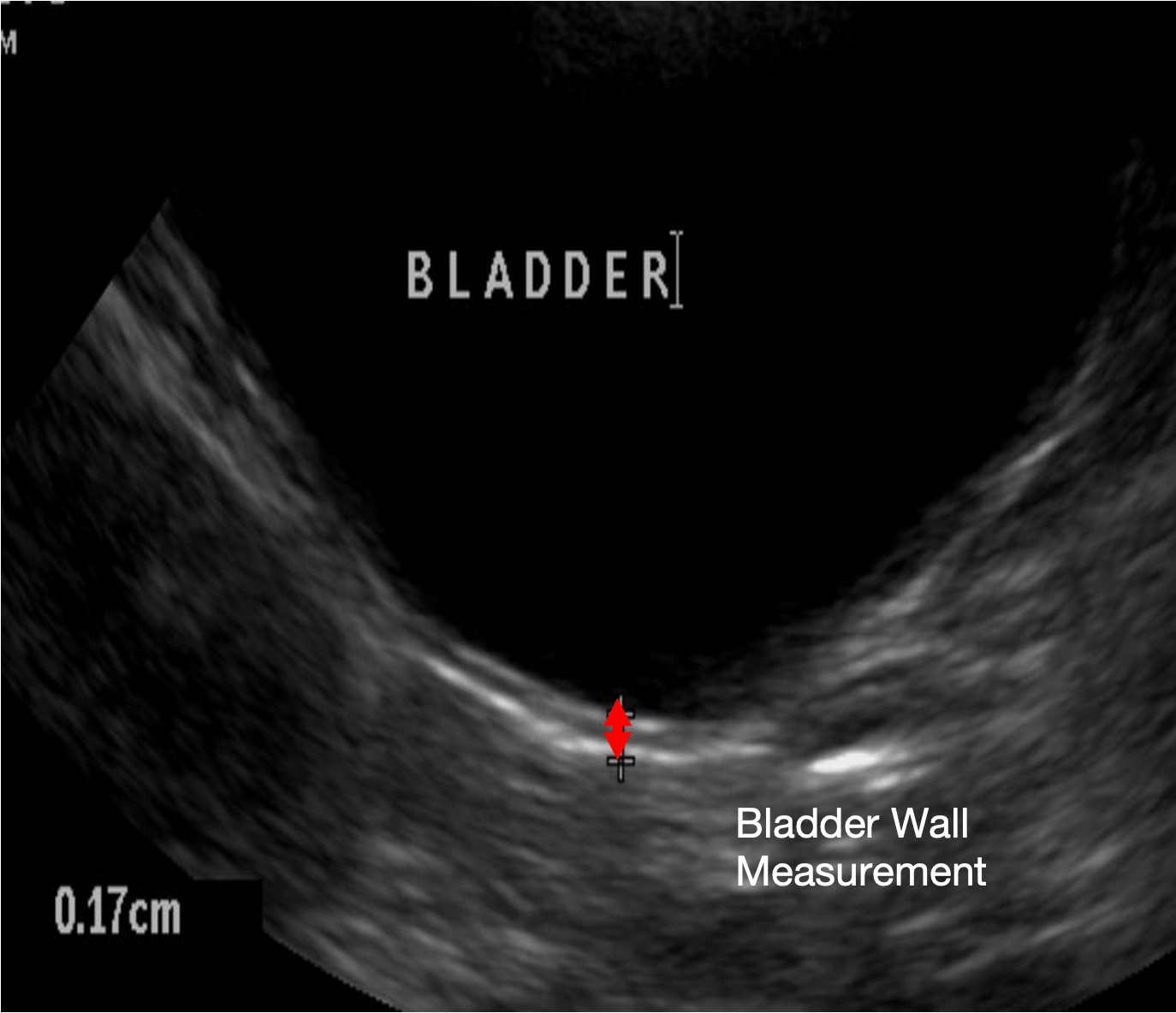
Measure the bladder wall along the main beam axis for maximum resolution and increased accuracy
The Urethra
Technique for Scanning the Urethra
- Limited visualisation on ultrasound
- Extends caudally from bladder neck as two hyperechoic parallel walls
- In male dogs, prostatic urethra seen as double reflective channel
- Identify the neck of the urinary bladder as a beak-shaped region of the trigone
- Follow the urethra as a continuous double-walled structure extending from the bladder neck in long axis plane
- Trace the urethra caudally to the level of the ischial arch / pubic bone
- Reassess in short axis, assessing luminal patency or wall irregularity
- Note that when distal urethral obstruction or pathology is suspected, it may be necessary to scan the penile urethra of a canine patient (in both long and short axis planes) using more than one scan approach to counteract the acoustic shadowing from the penile bone obscuring the urethral channel and visualising any filling defect/abnormality
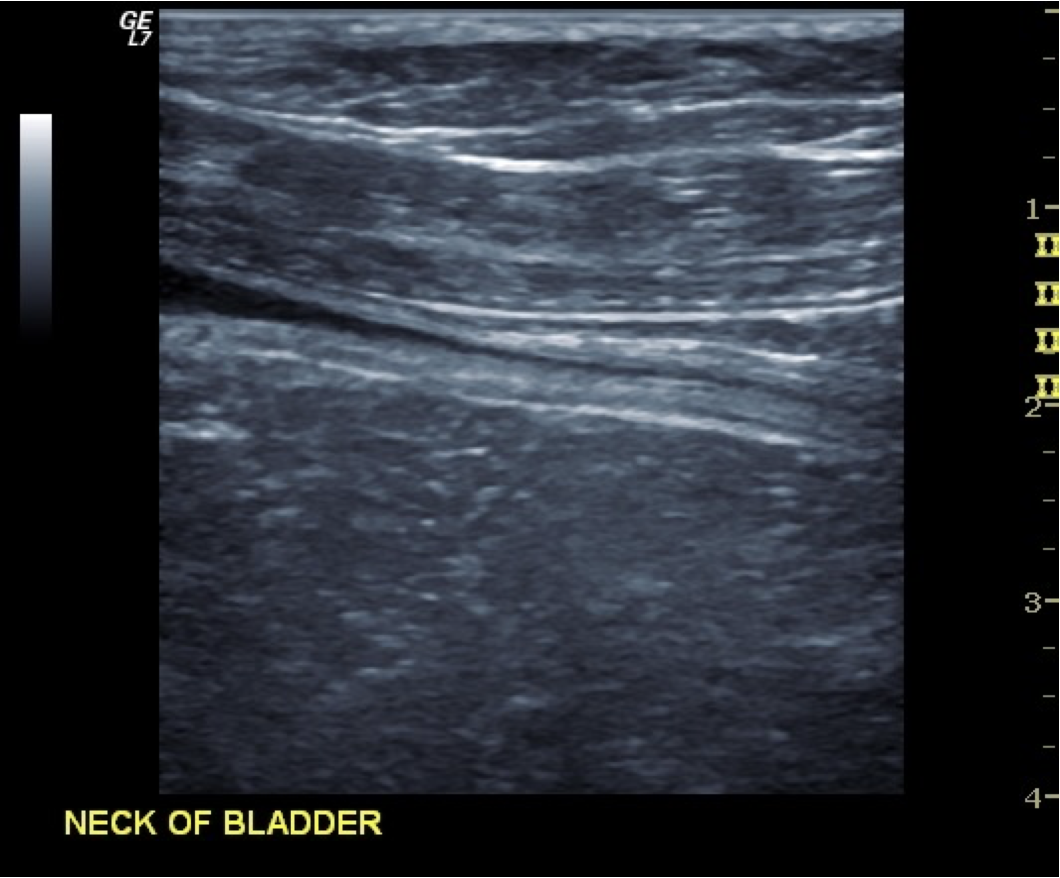
Remember from Step 4 – Appreciating the hormonal effect on ultrasound appearances can help to ascertain normality. This is particularly true when assessing prostate size in entire/neutered male dog and when assessing uterine and ovarian appearances in bitch and queen.
The Prostate Gland
Anatomy Refresher
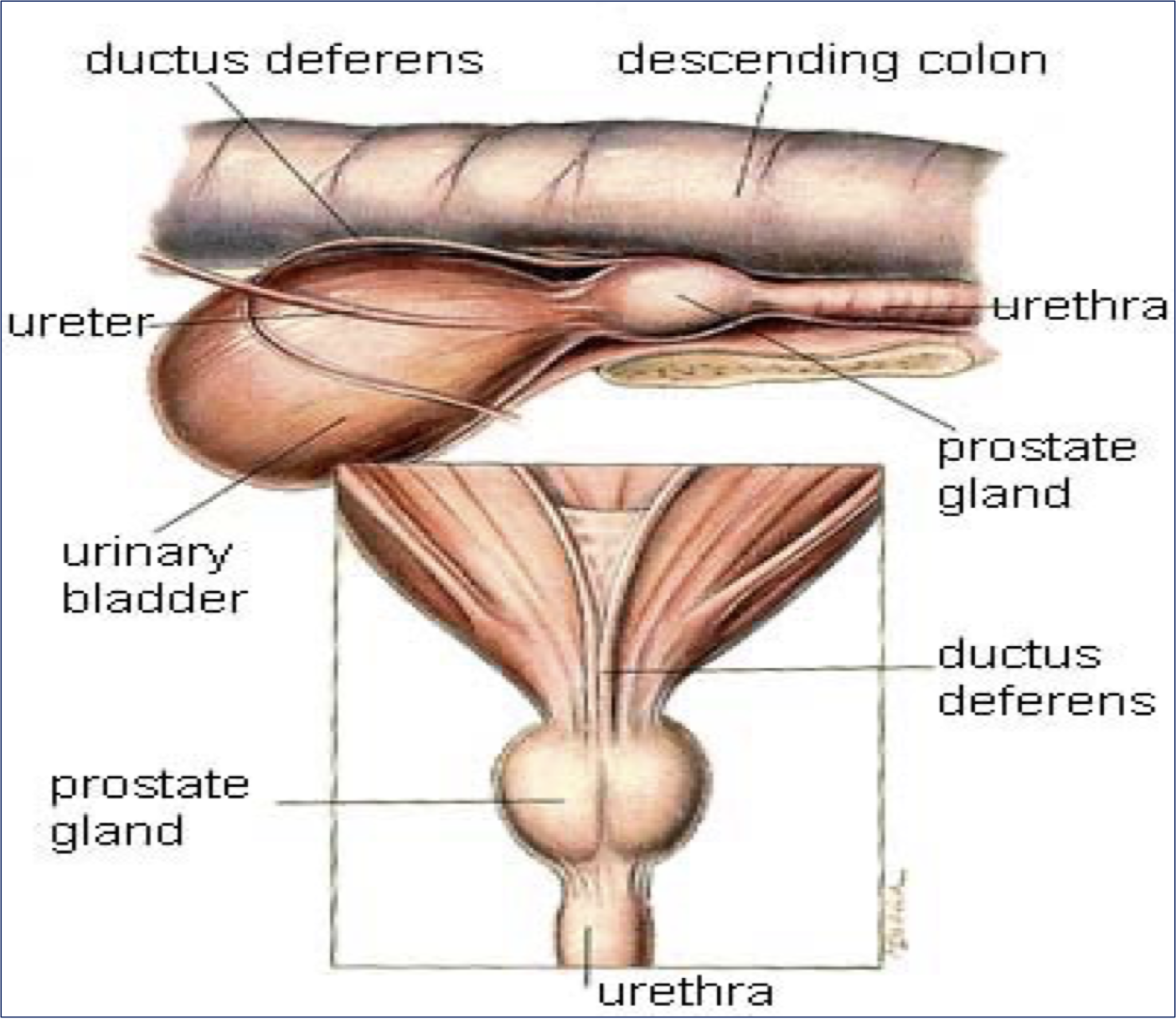
Anatomical diagram courtesy of https://www.dog-health-guide.org/canineprostatecancer.html
Technique for Scanning the Prostate Gland
- With the patient in right lateral recumbency position and the probe orientation marker towards the patient’s head, place the transducer on the left lateral aspect of the patient’s caudal abdomen. Again the pencil grip will be the most comfortable.
- Now slide the transducer caudal in long axis section, angling down towards the table top, to locate the urinary bladder.
- You may need an assistant to hold the left hindlimb out of you way, enabling you to have easier access to the caudal structures.
- Follow the urinary bladder neck caudal, often behind the pubic bone and slide caudal to locate the prostate.
- You may need to angle the probe towards the patient’s tail to identify the prostate gland in its entirety. It normal cases, it will appear as two symmetrical rounded lobes, one lying each side of the pelvic urethra.
- Measure each of the lobes for comparison in the long axis view.
- Once the prostate has been examined in multiple long axis sections, rotate the probe, keeping the prostate gland still in view, and assess in multiple short axis sections, scanning beyond the prostatic margins (in each plane).
- In short axis, the prostate gland will appear as a rounded soft tissue mass which has the short axis of the prostatic urethra running centrally through it.
- A small or intra-pelvic prostate gland may be difficult to assess – PR pressure may render gland easier to visualise
- A patent prostatic urethra can be a normal finding in sedated or anaesthetized dogs or may be indicative of distal urethral obstruction.
- The feline prostate is not identified on ultrasound.
- Para-prostatic lesions vary in appearances.
Normal Ultrasound Characteristics
- Location, size and appearance vary with age, neutered status and previous disease
- Two prostatic lobes
- Entire dogs – prostate gland is homogenous, hypoechoic with a finely stippled hyperechoic echotexture
- Lobes should be smooth in outline
- Elliptical in long axis and rounded in short axis
- Prostatic urethra runs through centre, seen in long axis as parallel hypoechoic channel within the urethral walls
- Prostatic size strongly correlates with age and body weight (Ruel et al, 1998)
- In neutered dogs, normal prostate gland is hypoechoic and inconspicuous
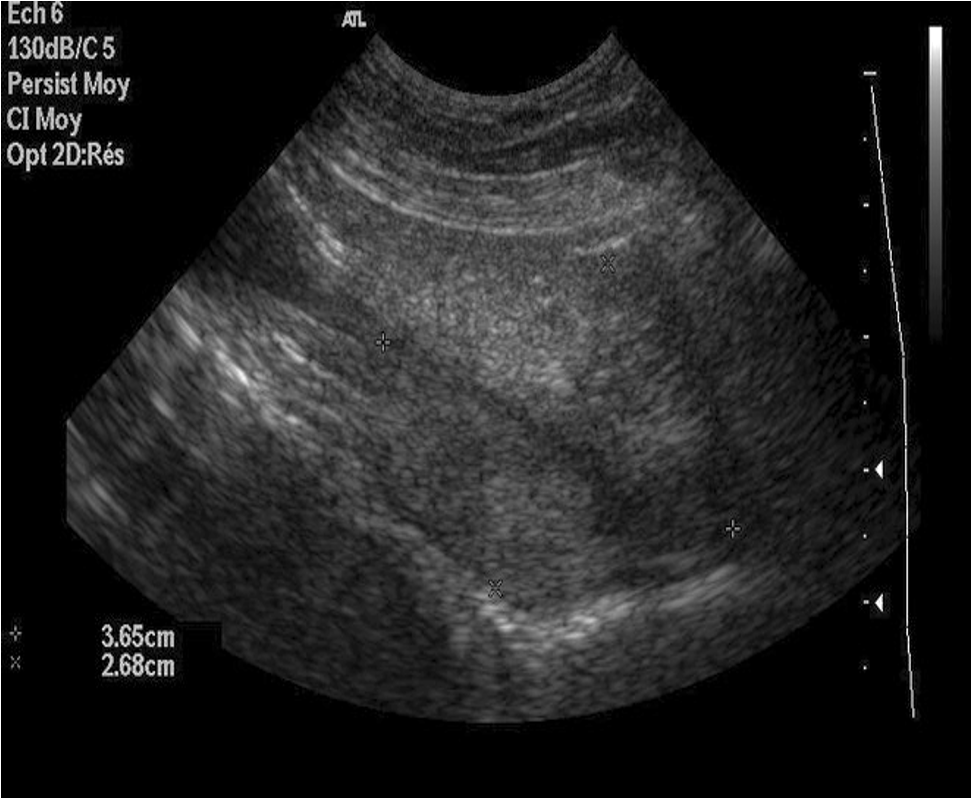
Normal prostate in entire male canine patient
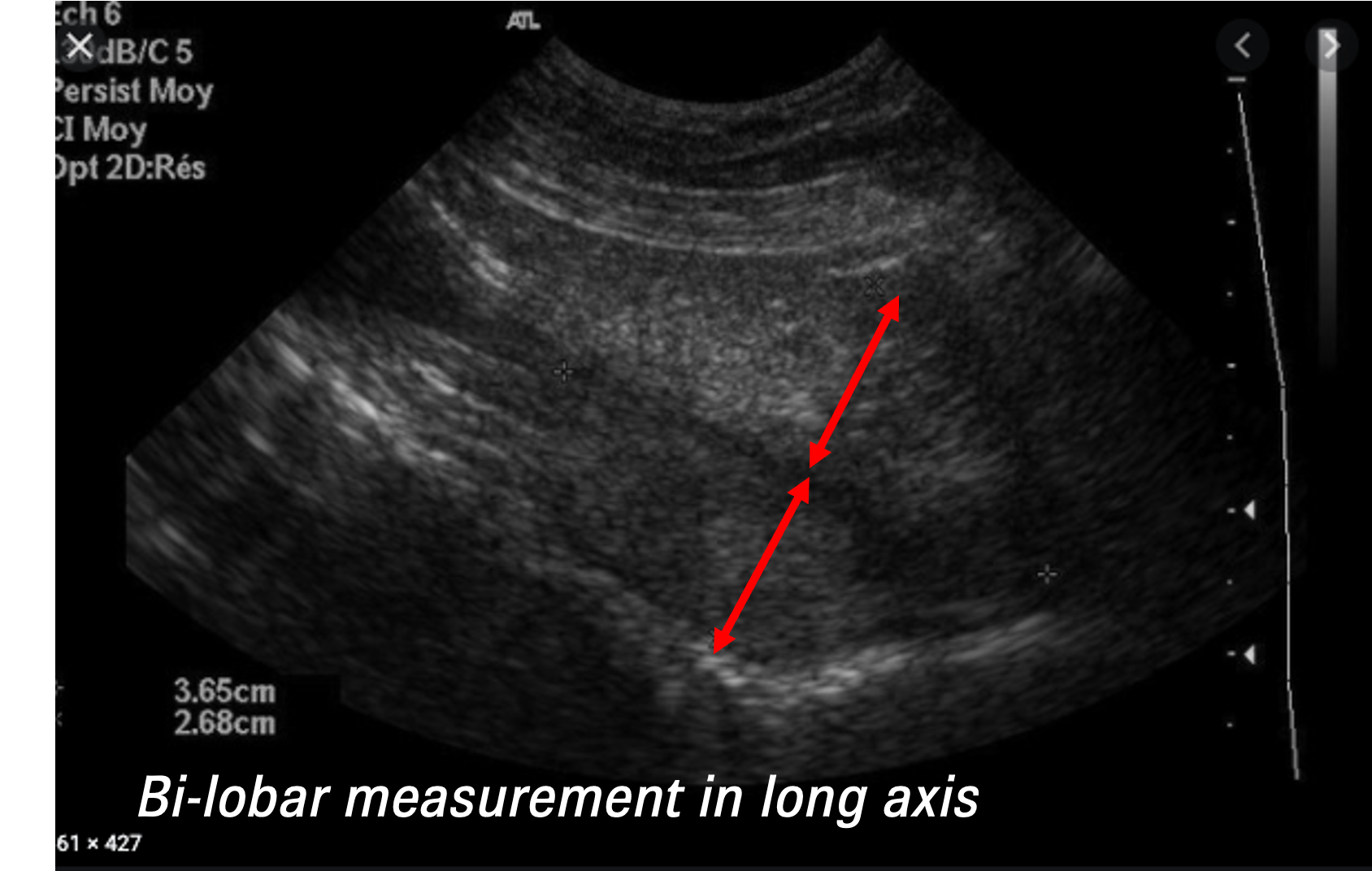 Technique for bi-lobar prostatic measurements
Need to Appreciate and Assess
- Size – bi-lobar measurement taken in the long axis of the prostate
- Symmetry – any discrepancy between shape of lobes?
- Borders – should be smooth, not irregular, ill-defined or nodular
- Echotexture – should be homogenous; is the echotexture indicative of complex, hyperechoic, focal or diffuse disease
The Non-Gravid Uterus
Anatomy Refresher
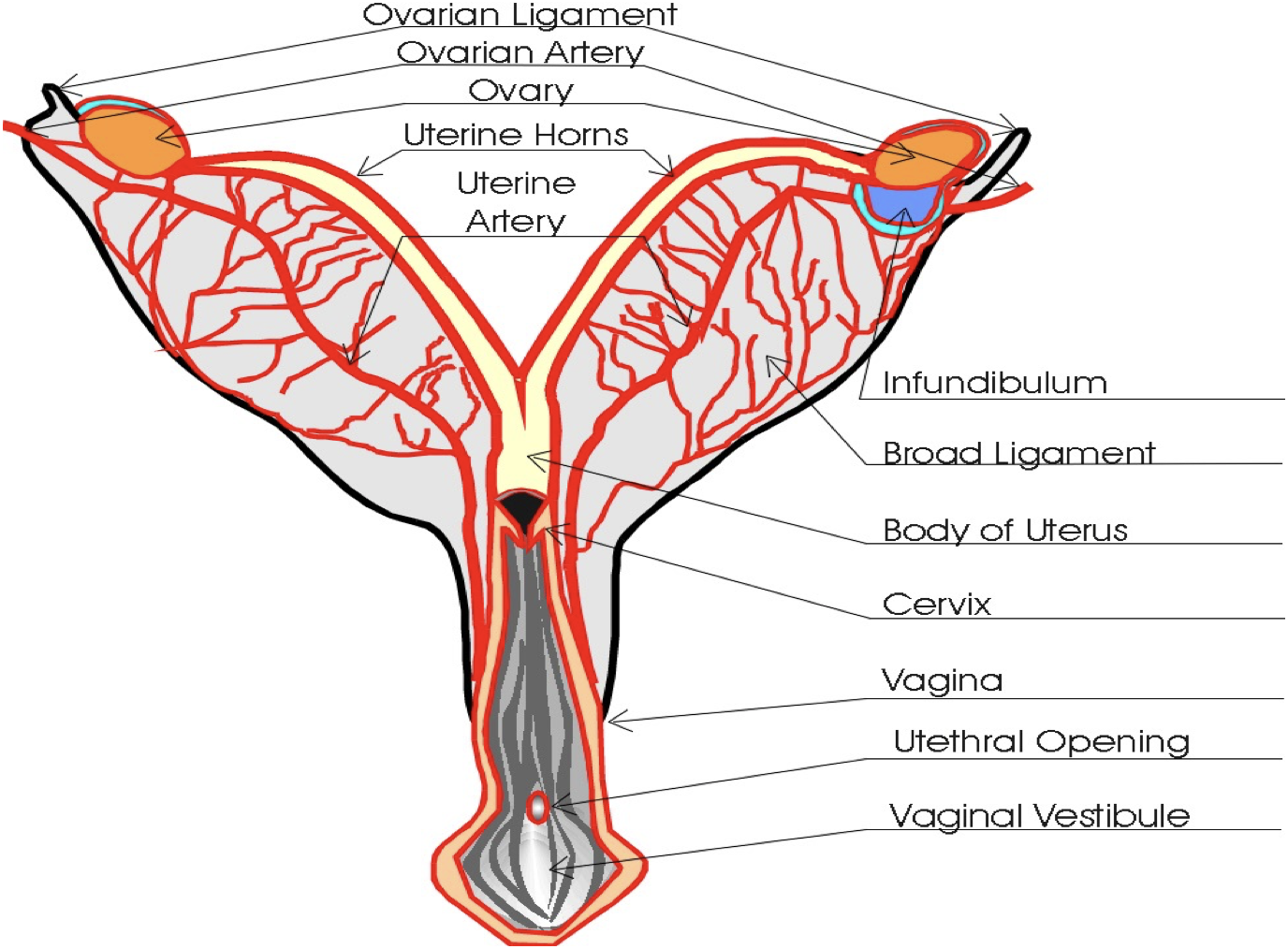
Anatomical diagram courtesy of https://www.safarivet.com/care-topics/dogs-and-cats/reproduction/
Technique for Scanning the Uterus
- Scan uterus and uterine horns at time of scanning bladder due to location proximity (makes sense and is effective from a time management perspective).
- With the patient in the right lateral recumbency position, place the transducer with the orientation marker towards the patient’s head, on the left caudal abdomen, angling down towards the table top, to positively identify the urinary bladder in a long axis section.
- Again, the pencil grip is most likely to be the most comfortable for assessing the uterus in long and short axis.
- Identify the uterine body dorsal to the bladder neck, also in long axis.
- Systematically scan through the uterus, uterine horns in both long and short axis (horns may be easier to trace in short axis plane).
- Always scan beyond the borders of the region of interest (ROI), cranially, laterally, medially and caudally for completeness.
- Take measurements to mark the boundaries of structures / any focal irregularities.
Normal Ultrasound Characteristics
- The uterus is often not visualised in non-gravid dogs and cats when normal and quiescent i it is often isoechoic to surrounding tissue.
- The uterus is a tubular structure between the urinary bladder and descending colon.
- Size and appearance depend on breed, species and stage in oestrus cycle.
- 3-8mm diameter uniformly hypoechoic (late di-oestrus and an-oestrus).
- 1mm hyperechoic luminal echo with hyperechoic inner uterine layer (pro-oestrus, oestrus and early di-oestrus).
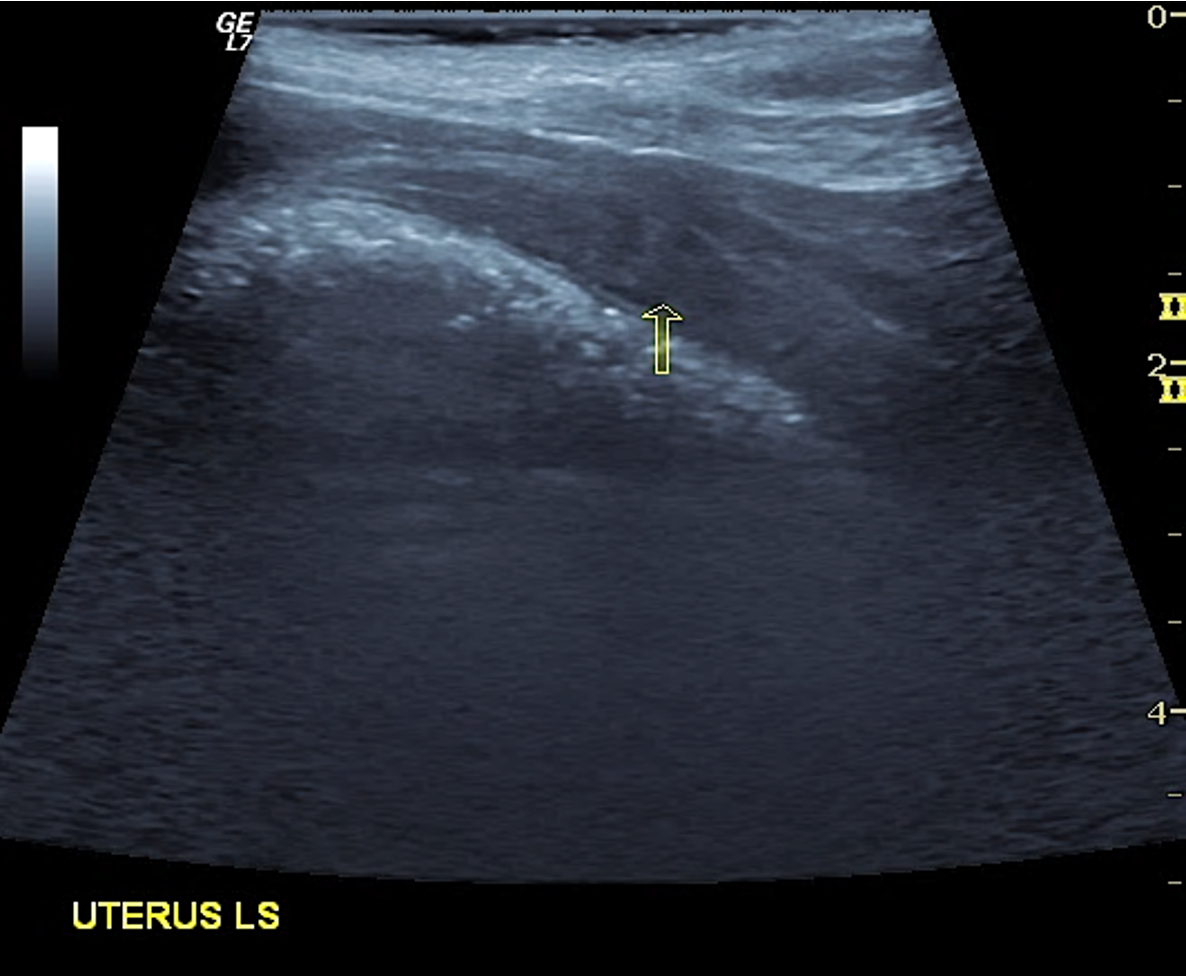
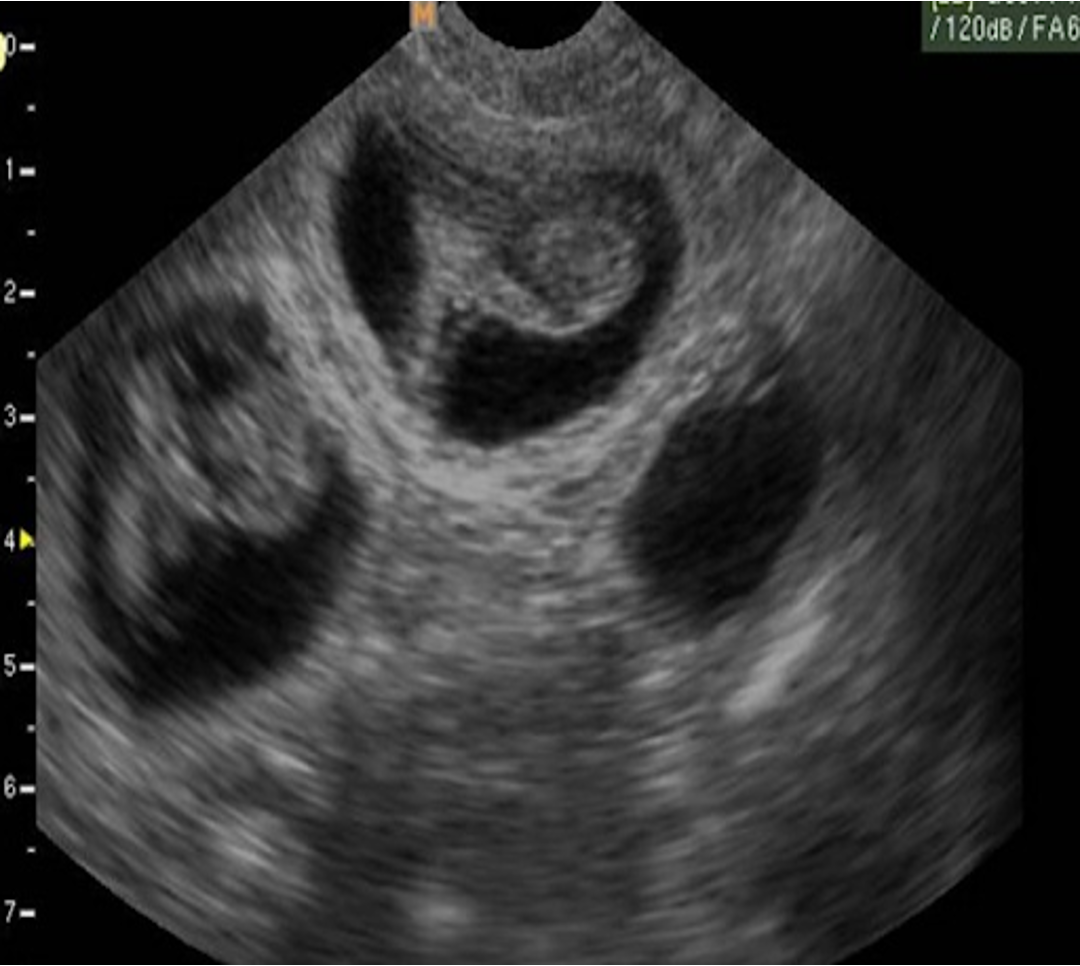
- Size, shape and echotexture of the uterine body and both uterine horns.
- Any abnormal thickening or fluid-content associated with the cavities of the cervix, uterine body and both horns..
2. Gravid Patient
- Gravid uterine body and horns begin to enlarge within days due to hormonal changes.
- Pregnancy can be positively confirmed on ultrasound when early gestation sacs containing fetuses are visible within the uterine horns (around 20 – 25 days after last mating).
- Fetal viability and mobility confirms viability (use M-Mode to assess for fetal heart motion (FMH) and not colour Doppler as less acoustic power involved).
- Post-parturition, the involuting uterus is detectable for 3-4 weeks.
The Descending Colon
Anatomy Refresher
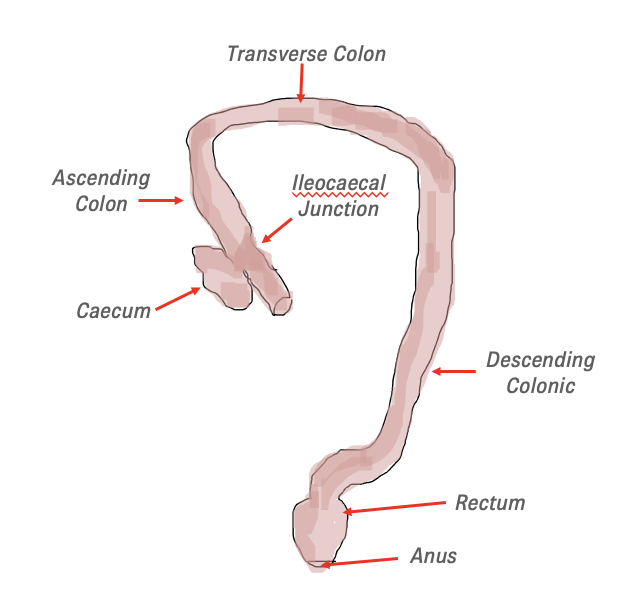
Aspire UCS Technique for Scanning the Descending Duodenum
- The patient remains in the right lateral recumbency position, following on from Step 4
- Place the transducer on the left caudal aspect of the patient, pointing down towards the table top, this time start with the probe in a short axis plane i.e., the orientation marker will be towards you if holding the probe using the pencil grip once more.
- Identify the urinary bladder in a short axi.s
- The descending colon should also be visualised in a short axis plane (it appears as a round section of bowel), dorsal to the bladder, on the right of the screen in the far field (at around the 4 o’clock position).
- Hyperechoic gas within the colon will often help you to identify it.
- Still in a short axis section, slide the probe cranially, following the length of the colon from the very caudal aspect, cranially towards the spleen.
- If possible, continue to trace the transverse colon towards and across the patient midline, following the colon into the ascending colon to the level of the ileo-caecal colonic junction (ICCJ).
- Identification of the ICCJ from the left lateral and ventral approach may not always be possible in medium to large dogs, but with application of gentle graded compression is often possible in smaller dogs and cats.
- Alternatively, we can also assess the ICCJ region from the right underside of the patient, as seen later in Step 6.
- The ICCJ is positively identified as the proximal colonic section by scanning in short and/or long axis section to identify the smaller calibre ileum as it inserts into the colon, adjacent to the blind-ending caecum.
- Always look for prominent, enlarged right colic lymph nodes in the region of the ICCJ.
Normal Ultrasound Characteristics
- The colon is part of the GIT and as such has the characteristic wall layering echopattern seen already in the stomach and duodenum in Step 2
- The layering seen on ultrasound correlates well with the physiological layers of the GIT, namely:
- Mucosal layer (black/hypoechoic – remember is dark at Midnight)
- Submucosal (white/hyperechoic – remember Stars are bright/white)
- Muscularis (black/hypoechoic) – remember it’s dark at Midnight)
- Serosal (white/hyperechoic – remember Stars are bright/white)
- Wall layer thickness decreases gradually as we progress through the bowel from stomach to colon.
- Fluid content within the caecum is not a normal finding.
- It is normal to find gas within the colon and this will obscure visualisation of any structures (luminal content, dorsal wall) lying dorsal to the gas since sound cannot be transmitted through gas. In these circumstances, it is important to scan the colon from more than one approach, either by scanning from the underside of the patient or by altering patient position.
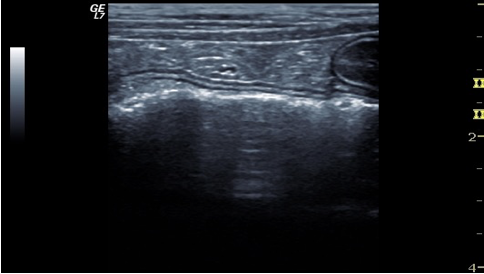
Long axis section of normal, gas-containing descending colon. Note the typical gas reverberation artefact. No anatomical detail is seen dorsal to the colonic gas
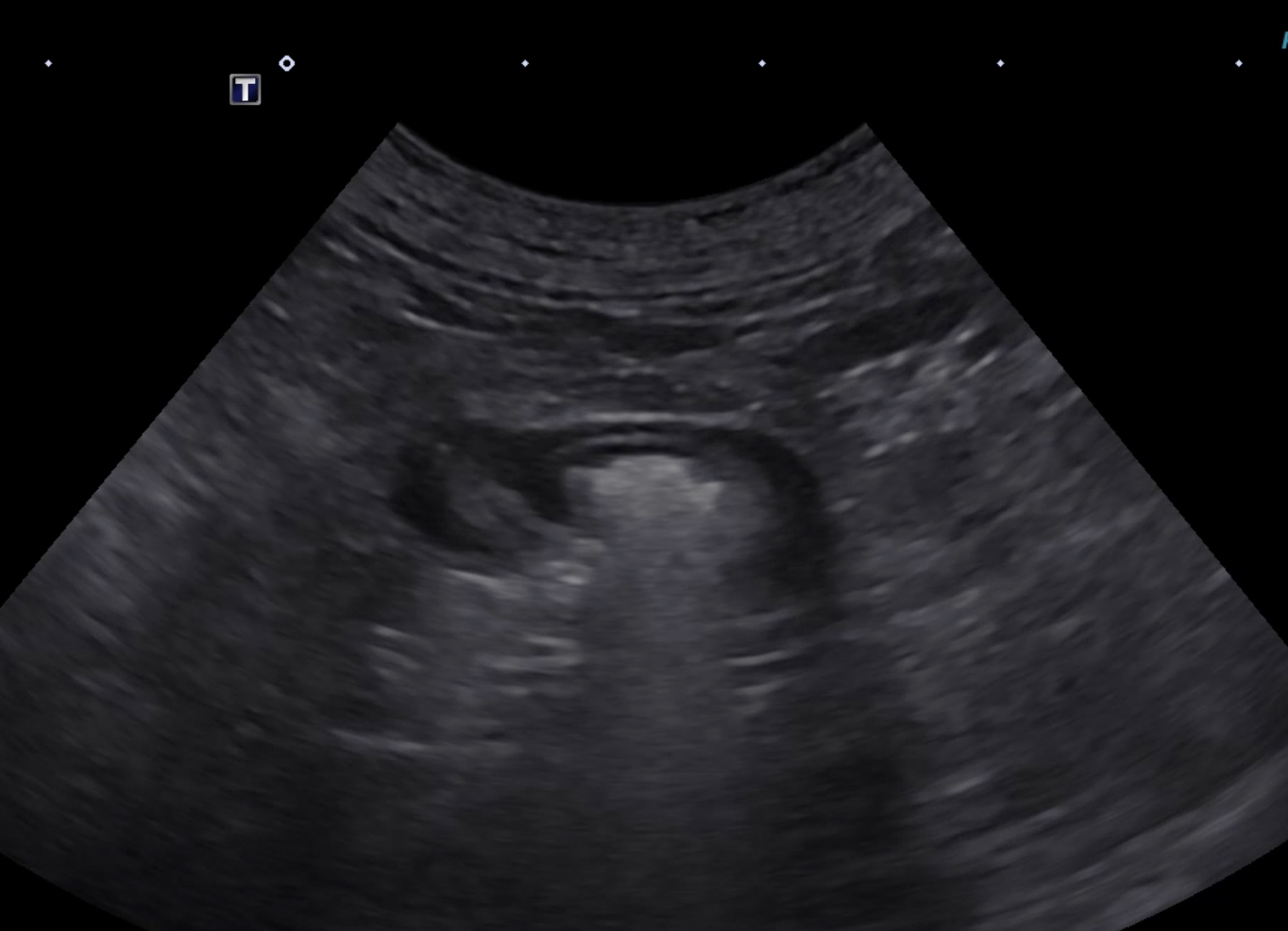
ICCJ – ileum seen on left in short axis entering the colon, also in short axis on the right of the screen
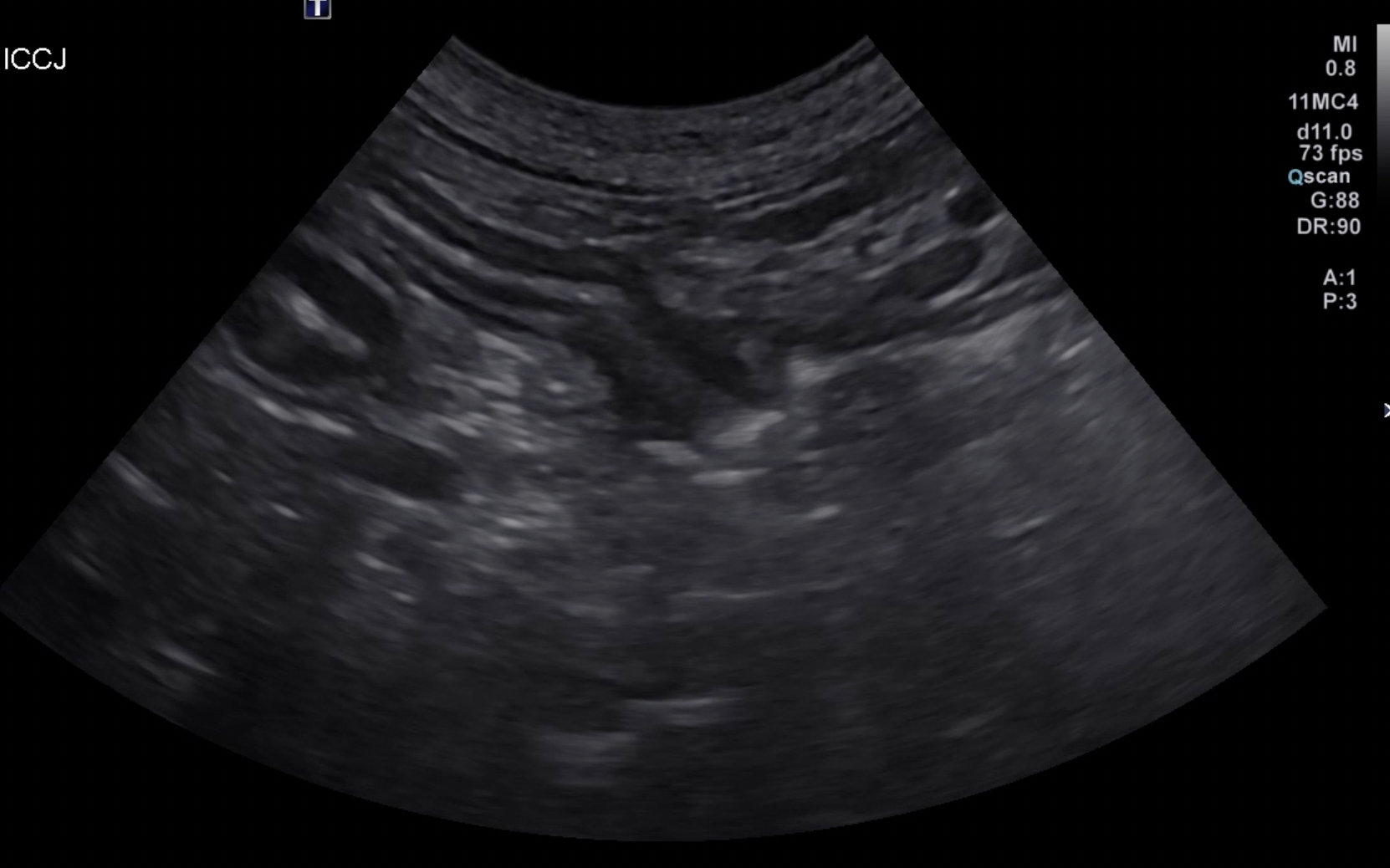 ICCJ – ileum seen on left of the screen in long axis entering the colon, also seen in long axis on the right of the screen
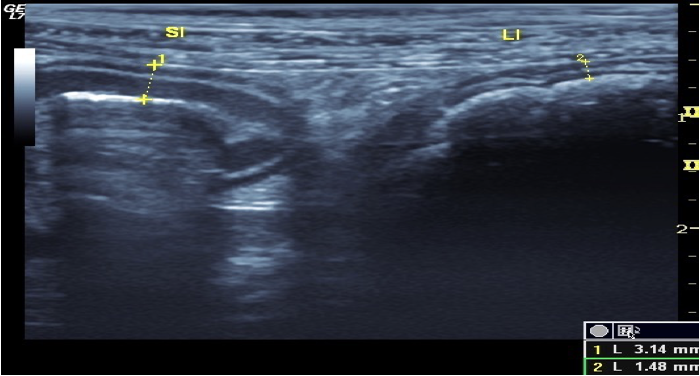
Comparative wall layer thickness of normal small intestines (duodenum, jejunum and ileum), left image/measurement vs normal large intestines (colon), right image/measurement. Commonality of the wall layer architecture can be seen
Need to Appreciate and Assess
- Don’t forget to consider plain film radiographs/other forms of imaging which can complement and clarify ultrasound findings.
- The colon has the thinnest wall of the GI Tract, but wall layering is difficult to distinguish because of distension due to gas and faeces.
- The descending colon is located dorsal to the bladder and extends cranially up the left flank.
- The transverse colon is located caudal to the greater curvature of the stomach.
- The ascending colon is in the right cranial quadrant with the ICCJ lying medial to the right kidney.
- One of the reasons the ICCJ can be difficult to see is because of gas in the caecum. In dogs the ICCJ is a spiral shape but in cats is more flattened and conical in shape.
Adopting a systematic technique for assessing the sections of the gastrointestinal tract is critical when trying to locate foreign bodies, pathological changes or sites of potential GI obstruction.
If you cannot say with precision and confidence exactly which section of the GIT is involved, then you should at least be able to narrow it down by saying which section isn’t involved.
Now you need to practice, practice and practice more – focus solely on scanning all the structures in Step 5 in a comprehensive and systematic manner.
Measure any abnormal variants.
Don’t forget to optimise your image as you go and take correctly annotated, representative images of the structures under examination.
https://shorturl.fm/QFpFC
https://shorturl.fm/BGyyE
https://shorturl.fm/lvfFH
https://shorturl.fm/0Q3n4
https://shorturl.fm/VH7Is
https://shorturl.fm/fGYhf
https://shorturl.fm/zijFF
https://shorturl.fm/v9HtA
https://shorturl.fm/Vu2aw
https://shorturl.fm/JEyMv
https://shorturl.fm/2E1bx
https://shorturl.fm/Boz75
https://shorturl.fm/klBhW
https://shorturl.fm/67XOV
https://shorturl.fm/MI1Yq
https://shorturl.fm/fEJcX
https://shorturl.fm/dirf6
https://shorturl.fm/3hwg3
https://shorturl.fm/AITjP
https://shorturl.fm/MCSbr
https://shorturl.fm/tgaxT
https://shorturl.fm/YKzOO
https://shorturl.fm/baElX
https://shorturl.fm/CPenK
https://shorturl.fm/ugRGh
https://shorturl.fm/YYd3X
https://shorturl.fm/llpR2
Последние новинки музыки 2026 скачать бесплатно https://shorturl.fm/naLA6
https://shorturl.fm/xqxVb
https://shorturl.fm/8Guds
https://shorturl.fm/NStVL
https://shorturl.fm/6gMjw
https://shorturl.fm/y5G0Y
https://shorturl.fm/9L4Ez
https://shorturl.fm/UObqu
https://shorturl.fm/M54CV
https://shorturl.fm/HpFuE
https://shorturl.fm/0cAqB
https://shorturl.fm/UIfJm
https://shorturl.fm/Olyqr
https://shorturl.fm/TFtVi
https://shorturl.fm/ZfoAP
https://shorturl.fm/ZBpSN
https://shorturl.fm/eClZI
https://shorturl.fm/u6q8s
https://shorturl.fm/DF73z
https://shorturl.fm/efFX0
https://shorturl.fm/h1fdY
https://shorturl.fm/xWyNY
https://shorturl.fm/WG5hS
https://shorturl.fm/HC73Y
https://shorturl.fm/wXRAP
https://shorturl.fm/O5Tmg
https://shorturl.fm/HxDgS
https://shorturl.fm/LuMq6
https://shorturl.fm/ZHI0J
https://shorturl.fm/wyjqG
https://addlinks.pro/AHX0M
https://addlinks.pro/uEmoz