

The Full Monty – Key Skills for Small Animal Abdominal Ultrasound
Course curriculum
Introduction to this course
First things first, let’s find out a little bit more about you!
Introduction to Module 1
Ultrasound generation and how images are formed
Ultrasound transmission
The importance of transducer and image orientation
Which transducer/probe to use and why. The compromise between depth and image resolution
How to use the depth and zoom controls and the benefits of getting it right
The impact of overall gain (OG) and Time Gain Compensation (TGC) controls on your image
How does adjusting the focus control affect your image?
When and why you should utilise the Scan Range or Sector Angle (Field of view) control
What is dynamic range and how does it help you?
How to use the ultrasound machine controls to optimise the image
The importance of image annotation
How to make sure you measure structures correctly
What you need to consider when evaluating structure with ultrasound
The importance of following a systematic approach to an ultrasound scan
Infection prevention and control and caring for your equipment
The importance of presets and what you need to consider when choosing an ultrasound machine
Module 1 – Checkpoint Quiz
Introduction to Module 2
How to prepare for an abdominal ultrasound survey
How to assess the liver of the canine and feline patient
How to assess the gallbladder of a canine and feline patient
How to assess the biliary tract and main branch of the portal vein in a canine or feline patient
GIT Part 1: How to assess the stomach of a canine or feline patient
GIT Part 2: How to assess the small intestine of a canine or feline patient
GIT Part 3: How to assess the colon of a canine or feline patient
How to assess the spleen of a canine or feline patient
How to assess the kidneys of a canine or feline patient
How to assess the urinary bladder of a canine or feline patient
How to assess the aorta and caudal vena cava (CVC) of a canine or feline patient.
How to assess the adrenal glands of the canine and feline patient
How to assess the pancreas of the canine and feline patient
Basic Abdominal Point of Care Ultrasound (APoCUS) – Abdominal free fluid, where to find it in the canine and feline patient
Abdominal Free Fluid Scoring
No. 1. Guess the A-PoCUS Site
No. 2. Guess the A-PoCUS Site!
No. 3. Guess the A-PoCUS Site!
No. 4. Guess the A- or T-PoCUS Site!
No. 5. Guess the APoCUS Site!
No. 6. Guess the APoCUS Site!
No. 7. Guess the APoCUS Site!
Answers for No. 1-7: Guess the A-PoCUS Site
Module 2 – Checkpoint Quiz
Copy of More resources for you!
Introduction to Module 3
Setting your ultrasound system up for ultrasound-guided needle procedures
In-plane and out-of-plane technique for ultrasound-guided needle procedures
Storing your images and documenting ultrasound-guided needle pocedures
Top tips for success with ultrasound-guided needle procedures
Module 3 – Checkpoint Quiz
Congrats, and thats a wrap!
You’ve completed your Aspire UCS course and have a head full of knowledge! Tell us how you feel NOW about scanning.
Before you go, could we please have a little feedback on the course?
About this course
- 50+ lessons
- 12 hours of video content
12 hours of (CPD) points
Continuing professional development points
Why is this course for you?
Gain knowledge
Develop essential knowledge of ultrasound fundamentals, abdominal ultrasound survey scanning and ultrasound-guided needle techniques.
Build confidence
Build confidence for independent practice and a successful in-house diagnostic ultrasound service.
Practical learning
Learn through online theoretical and practical demonstration tuition.
Point of care ultrasound
Acquire the ability to undertake basic abdominal and thoracic PoCUS examinations when time is precious and clinical indications dictate.
Become competent
Enhance competency with basic ultrasound system controls, image optimisation skills and abdominal ultrasound techniques.
Build your consistency
Build the core skills to consistently obtain diagnostic abdominal ultrasound images to maximise patient outcomes.
Getting the most out of your ultrasound system
Learn more about your ultrasound machine, use it more effectively or get more accurate result diagnoses: take our course.
Meet your instructors
Angie trained as a Diagnostic Radiographer in the late 1980s. She started her ultrasound journey in West Sussex in the early 1990s, having not long since qualified as a radiographer in Plymouth, Devon. From there she moved to Wales, on to London and then back to Wales again; with each move she left behind a trail of confident, competent ultrasound practitioners across a wide range of specialities (sonographers, doctors, midwives, nurses, aortic screeners).
Angie worked in numerous NHS hospitals across the UK, helping to set up ultrasound services, working her way up to management level, becoming a clinical ultrasound tutor and part-time lecturer for numerous CASE accredited ultrasound programmes.
Several decades later she met Julie and after much persuasion, Angie finally took the plunge to leave the NHS and work with Julie as her ‘Head of Ultrasound’ for a UK wide imaging company, further enriching her business and clinical management skills. Four years on and Angie left the company to diversify into small animal ultrasound at specialist level.
She soon realised the considerable difficulties faced by primary care vets in particular when training in ultrasound and set upon her mission to make a difference! She is especially passionate about quality, standards and competency-based learning.
Covid-19 lockdown gave Julie and Angie the perfect opportunity to write some professional guidelines for small animal abdominal ultrasound. The British Medical Ultrasound Society (BMUS) published 'Small Animal Veterinary Guidelines for Professional Ultrasound Practice' in December 2022 and these have been endorsed by the ECVDI and IVUSS.
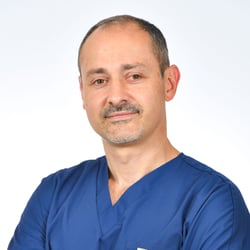
Miguel is an EBVS & RCVS Specialist in Veterinary Anaesthesia and Analgesia. He qualified in Complutense University, Madrid. He undertook a residency in Anaesthesia at Bristol Vet School, and has a special interest in locoregional anaesthesia and neuroanaesthesia. Miguel is actively involved in training RVNs, interns and residents in anaesthesia-related topics
What our students say?
Why stop there?
Join the Sonographer on your Shoulder Programme and get access to this course and a lot more!
Our ‘Sonographer On Your Shoulder’ (SOYS for short) ultrasound training and mentorship programme really is the business! It offers a combination of essential robust peer support and unique, comprehensive, blended learning resources to build knowledge and skills.
So if you’re looking to become the next ultrasound guru in work, or you want your clinical team to become more comfortable, confident and competent at ultrasound, keep revenue and diagnostic services in-house, then click ‘find out more’
FAQ's
Got a question?
We have carefully designed the course to use a range of learning techniques to suite a range of learning styles, using video, detailed course notes, and end of module quizzes.
Our Key Skills in Small Animal Abdominal Ultrasound Course is made up of three modules and more than 30 individual lessons with high quality seminar videos, practical demonstrations and detailed lecture notes.
Most people study at their own pace taking from 2 days to several weeks. You can up to six weeks to complete the course, we’ll send you regular reminders and updates of your progress as you go through the course.
Absolutely! We recommend you come back to the seminar lessons and practical demonstrations as much as you need to.
Yes, we provide support to our students. After you register we will provide details on how to access the forum.